Vermicomposting Deep Dive
Worm-worked organic matter is a different product from heat compost — finer, denser with biology, and carrying a distinctive chemistry. Here is the full mechanics of doing it well, at any scale.
Why vermicompost is different
In heat composting, microbes do the work and temperature is the tool. Vermicomposting is a digestive process: earthworms ingest organic matter, and their gut — a miniature mobile bioreactor — physically grinds, mixes, and inoculates it with a dense microbial community. The extruded castings are:
- Structurally fine — granular aggregates, stable in water, ideal for seedbeds and media blends.
- Microbially rich — generally higher microbial biomass and enzyme activity per unit mass than thermophilic compost, with a distinctive bacterial–protozoan–nematode web.
- Chemically altered — humified, with lower phytotoxic load, higher humic content, and documented plant-growth effects (hormonal/auxin-like activity is reported in several studies, though mechanisms remain debated).
- Not a fertilizer — total NPK is modest (typically ~1–2.5% N, ~0.5–1.5% P, ~0.5–1.5% K, dry basis). Its value is biological and physical, not bulk nutrients.
Worm biology in practice
Species
Composting relies on epigeic (surface-litter) species that tolerate crowding and disturbance — above all Eisenia fetida (red wiggler, tiger worm) and E. andrei; Perionyx excavatus and Eudrilus eugeniae suit tropical settings. Garden nightcrawlers (Lumbricus terrestris) are endogeic/anecic — they cannot survive bins and are useless for vermicomposting.
Numbers
- Mature worms produce a cocoon every 2–4 days; cocoons hatch in ~3 weeks (at 25 °C); worms reach reproductive maturity in ~2–3 months. Populations can double every 2–3 months under good conditions.
- Feeding rate: about 0.5–1× their own body weight of finished-style feed per day at optimum temperature — a practical stocking guide is 0.5–1 kg worms per kg of daily food input (i.e., 2 kg worms per m² in a thin-bed flow-through).
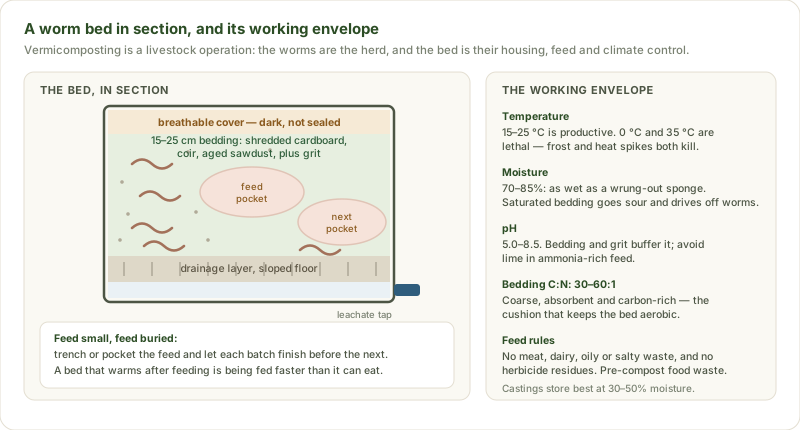
- Temperature: active 10–30 °C, optimum 18–25 °C for reproduction; below ~8 °C feeding nearly stops, above ~32 °C lethal stress begins.
- Moisture: castings should feel like a damp sponge (gently squeezing should only just wet your palm); worms survive 60–85% but feed poorly below ~70%.
- Oxygen: worms are obligate aerobes at the skin surface — the bed must breathe. Overfeeding and saturation kill quickly.
Systems and scale
| System | Scale | How it works | Pros / cons |
|---|---|---|---|
| Household bins | < 5 kg/day | Stacked trays or single bin with bedding; batch or continuous | Zero infrastructure / high per-kg labor, small throughput |
| Outdoor windrow | 0.1–5 t/day | Long shallow windrows in shade, worms migrating into fresh feed | Low cost / weather-exposed, slugs & birds, slower |
| Wedge / continuous | 0.5–10 t/day | Fresh feed added along one edge; finished castings harvested at the tail | Continuous harvest, low disturbance / needs regular feeding discipline |
| Flow-through reactor | 1–50 t/day | Thin bed (15–30 cm) on a floor grate; feed on top, castings scraped from below | Industrial throughput, best harvest separation / capital-intensive, feed must be pasteurized-ish (no heat spikes) |
Pre-composting is non-negotiable at scale: raw, fresh food waste generates ammonia and heat spikes that kill worms; a 2–6 week (sometimes up to 8) hot pre-compost or passive pre-rot reduces C:N and phytotoxins before worms see it. Flow-through facilities often pasteurize feed (65 °C, 1 h) to control pathogens and flies.
Feeding and environment
- What worms eat well: pre-composted food waste, aged manure (cattle, horse, dairy), vegetable trimmings, shredded paper/cardboard bedding, fruit waste in moderation (acid + flies), spent grains.
- What to restrict: excess citrus/alliums (acid + repellent oils), raw meat/dairy in large quantity, salty or oily wastes, seeds and whole fruit (rodents/flies), and any material with herbicide residues — worms concentrate and castings concentrate amidopyralid-type damage risk like any compost.
- Bedding: carbon-rich, absorbent, coarse: shredded cardboard, coir, aged sawdust. Target bedding C:N 30–60:1 and a bed that fluffs, not mats. Add grit (fine sand or crushed oyster shell) — worms need it to grind food in their gizzard.
- Feeding pattern: small, buryable batches (trench or pocket feeding) rather than full-surface layers; let each batch be consumed before the next (watch for bed temperature rising — feed is being added faster than it's consumed).
- pH: worms are unhappy much below pH 5 or above pH 8.5; buffering comes from bedding and grit, and lime-correcting overly acidic feed (avoid lime in ammonia-rich feed).
Harvesting and processing
The craft is separating worms from castings without trauma. Practical methods:
- Light separation: expose the bed to a bright lamp — worms dive; skim the top, repeat. Simple, slow, fine for small scale.
- Migration (most common at scale): stop feeding one side of the bed for 7–14 days; worms migrate to the fresh feed; harvest the exhausted side.
- Mechanical separation: rotating trommels or screeners (6–12 mm mesh) separate most worms after light drying; residual worms in product are tolerable and even marketed, but can be problematic for potted crops (soil compaction, root tunnels) — most commercial products aim for minimal live worms.
- Flow-through floors: worms self-thin upward; castings drop through the grate for belt/scraper harvest — the gentlest industrial method.
Post-harvest: dry castings slowly (they store well at 30–50% moisture; avoid heat-drying which kills biology), and store inside or under cover — rain leaches soluble N from fine castings quickly.
Product quality and use
| Parameter | Typical vermicompost | Use guidance |
|---|---|---|
| Moisture | 60–75% as harvested; 30–50% stored | Dry before bag/sale to reduce shipping weight |
| pH | 6.5–7.5 | Neutral-to-slightly alkaline; fine for most media |
| Total N (dry) | 1–2.5% | Slow mineralization; good seedbed N source |
| Organic matter | 40–60% dry | High-quality humus fraction |
| EC | 2–6 mmhos/cm | Watch for salt-sensitive crops; leach or dilute in media |
| Microbial activity | High (dehydrogenase, respiration) | The sales point — preserve through handling |
Typical use rates: transplant media 10–20% by volume (up to 30% for robust seedlings); field establishment drenches at 0.5–2 t/ha; golf/nursery top-dress at 5–20 t/ha. Vermi-tea (aerated extract of castings; see Compost Tea) is a popular premium product — brew from tested castings and use promptly.
Economics & markets
- Cost drivers: feed handling (pre-composting), climate control, labor intensity — per tonne, vermicompost is 5–20× more expensive to make than windrow compost. It competes on value per bag, not per tonne.
- Markets: retail bags ($10–30 per 10–20 L), greenhouse/blend media additives, premium landscape soils, nurseries, and the vermitea niche. Local garden-center and grower demand usually sets the ceiling.
- Scale economics: below ~1 t/day of finished castings, treat vermicomposting as a value-add or educational venture, not a profit center; large flow-through operations succeed as specialized processors of municipal organics.
- Business honesty: avoid "magic" claims; the resurgence of interest is real, but so are the margins — a modest, well-run worm operation with tested product beats an ambitious one with marketing hype.
Troubleshooting
| Symptom | Cause | Fix |
|---|---|---|
| Worms fleeing the bed | Ammonia (fresh manure), heat (overfeeding), acidity, dryness, or gas buildup | Check pH/temp/moisture; add carbon bedding; stop feeding 2–3 days; pre-compost feed longer |
| Mass die-off | Ammonia spike, saturation (no oxygen), or heat > 35 °C | Emergency: remove to fresh bedding; aerate; slow feed rate |
| Fruit flies / fungus gnats | Surface feeding of fine wet food | Bury feed deeper, cover with 5 cm bedding, let batches finish |
| White mites by the thousand | Healthy-to-over-fed bed; mites are decomposers (harmless) | Usually self-corrects; reduce feed slightly, add carbon |
| Sour smell | Anaerobic pockets from overfeeding or saturation | Aerate, fluff with dry bedding, reduce feed 50% |
| Bed won't heat / no activity | Too cold (< 10 °C) or bed too dry | Insulate or move; rewet to sponge-consistency |
| Castings smear / odor on storage | Too wet or harvested too fresh | Dry to ≤50% before bagging; store under cover |