Feedstocks & Recipes
Everything a compost pile consumes. Characterize your materials, then combine them to hit the three targets: C:N of 25:1–40:1, moisture of 50–60%, and enough porosity to breathe.
Browns and greens: the mental model
Browns are carbon-rich, usually dry, woody, or strawy: straw, wood chips, sawdust, dead leaves, corn stalks. Greens are nitrogen-rich and usually moist and green or fresh: manure, grass clippings, food scraps, fresh legume hay, coffee grounds. Browns build structure and energy; greens drive microbial growth and heat. A good pile is built in layers or blended batches of both.
Typical properties of common feedstocks
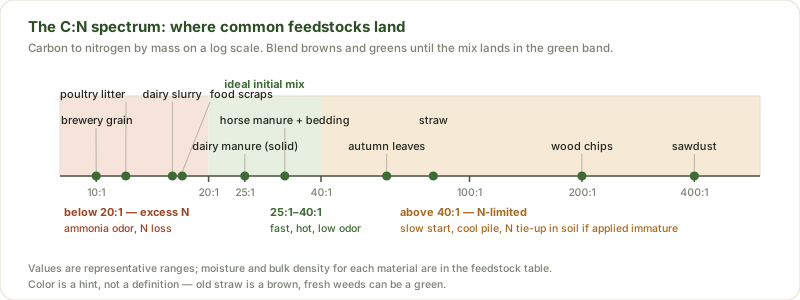
Values are representative ranges from published analyses; always analyze your own materials when precision matters (lab C:N + moisture costs little and prevents expensive mistakes).
| Material | C:N ratio | Moisture % | Bulk density kg/m³ | Notes |
|---|---|---|---|---|
| Dairy manure (liquid/slurry) | 12–20 | 85–92 | 950–1000 | Needs large volume of dry bulking agent |
| Dairy manure (solid/bedded pack) | 20–30 | 65–78 | 500–750 | Often composts as-is with minor amendments |
| Beef feedlot manure | 15–20 | 55–75 | 600–800 | Dense, gravel contamination common |
| Poultry litter (broiler) | 10–15 | 25–40 | 400–550 | N-rich; ammonia loss risk, mix carefully |
| Swine manure (solid) | 13–19 | 65–80 | 800–950 | Odorous; strong recipe control needed |
| Horse manure + bedding | 25–40 | 45–65 | 250–400 | Persistent herbicide risk (aminopyralid) |
| Straw (wheat/oat) | 60–100 | 8–15 | 60–120 | Excellent bulking agent, slow |
| Corn stover | 50–100 | 10–20 | 80–150 | Tough; grind or shred for speed |
| Wood chips | 100–500 | 15–45 | 250–450 | Gold standard for ASP/aeration |
| Sawdust | 200–750 | 20–60 | 200–400 | Compacts; blend with coarser material |
| Autumn leaves | 40–80 | 30–45 | 100–250 | Shred to prevent matting |
| Grass clippings | 12–25 | 65–82 | ~400 | Matts when pure; blend into layers <15 cm |
| Food scraps | 14–20 | 70–85 | ~700–1000 | Odor/vector risk; mix 2–3:1 with browns |
| Fruit/vegetable culls | 12–25 | 75–90 | ~700 | Acidic; lime or extra browns may help |
| Spent brewery grain | 8–12 | 70–80 | ~950 | Excellent N source, easily anaerobic |
| Coffee grounds | 17–25 | ~55–65 | ~400 | Compact but reliable green |
| Alfalfa hay | 13–20 | 10–20 | 100–200 | Fast green, weed seeds possible |
| Biochar (10% v/v) | — | — | ~200–400 | Additive: N retention, CEC, structure |
| Gypsum / zeolite / rock dust | — | — | — | Additives: see Additives & Inoculants |
| Rock dust / lime | — | — | — | Additive only; see pH note |
Manures: the farm's core feedstock
For most livestock farms, manure is the reason to compost and the feedstock that defines the recipe. Its characteristics vary enormously with species, bedding, and handling.
Dairy & beef
Solid or bedded-pack dairy manure with straw/sawdust bedding often has usable C:N and moisture straight from the barn, and composts well in turned windrows. Slurry/liquid manure must be dewatered, adsorbed onto dry solids, or blended with large volumes of bulking agent (commonly 1:1 to 1:3 manure:bulking by volume). Feedlot manure is drier and denser but often contaminated with soil and gravel — plan for screening.
Poultry
Litter is the most nitrogen-dense common feedstock (also high in P, Ca, and uric acid). Its uric acid converts to ammonia quickly, so poultry litter piles can lose large N fractions and emit strong odor early. Best practice: blend with high-C browns to an initial C:N near 30–35:1, keep moisture ≤55%, and avoid over-turning during the first two weeks.
Swine
Swine manure is wet, dense, and notoriously odorous; it composts best after solid-liquid separation or with generous bedding (deep-bedded systems produce excellent compostable material). Covered or aerated systems are strongly preferred.
Horse stables
Bedded horse manure is a convenient, well-balanced farm feedstock — with one critical caveat: some pasture herbicides (aminopyralid, clopyralid, aminocyclopyrachlor) pass through the animal and persist in hay/bedding and remain herbicidally active in finished compost, damaging tomatoes, beans, and other sensitive crops. Verify herbicide history before accepting off-farm stall waste.
Crop residues and other on-farm materials
- Straw & stover: high-C browns and structural backbone of many farm recipes. Shredding accelerates use.
- Spoiled silage: usable but variable; blend and monitor pH/odor.
- Culls & packout: wet, fast, acidic; blend with ample browns to prevent anaerobic pockets.
- Mortality (on-farm): legal in many regions via dedicated static-pile mortality composting — heavy cover (2 ft finished compost), core at 55 °C+, and strict biosecurity separation. Check local rules; the full method is in Mortality & Specialty Waste Composting.
- Manure solids from separators: fibrous, moderately dry; excellent base feedstock.
- Wood ash: adds K, Ca, raises pH; use sparingly (≤5–10% by volume) and never with lime-sensitive crops in mind.
- Biochar: pre-charged with nutrients ("charged" by soaking in manure slurry) to avoid temporary N tie-up in the pile.
Bulking agents and structure
A pile needs porosity as much as it needs nutrition. The bulking agent provides persistent air channels; without it, wet feedstocks collapse into anaerobic sludge. Particle size guidance: fine (<2 mm) decomposes fast but compacts; coarse (2–5 cm) sustains airflow for weeks; larger than ~6 cm may need screening out and recycling.
Wood chips are the classic choice for aerated systems because they persist through the active phase and can be screened out and reused 3–5+ times, amortizing their cost. Straw decomposes within the cycle (contributing nutrients) but offers less durable structure. A practical starting mix for wet feedstocks is 1 part feedstock to 1–2 parts bulking agent by volume, tuned by moisture and squeeze test.
Interactive C:N mix calculator
Enter up to six ingredients with their C:N, moisture, and mass (any consistent unit — kg, lb, tons). The calculator computes the blend's combined C:N, moisture, and guidance flags.
Interactive moisture adjustment calculator
The other half of the recipe: your pile (or blend) is at X% moisture and you need it at Y%. Enter the current mass and moisture, pick a target, and choose whether you're adding water or a dry amendment. It solves the dry-matter balance for the amount to add — and shows what the addition does to your C:N.
Pair it with the C:N mix calculator: that tool plans the recipe from scratch; this one corrects a pile or blend that's already built. Both are planning aids — the squeeze test and a thermometer at the pile remain the ground truth (see moisture management).
Other feedstock considerations
Food scraps & off-farm organics
Food scraps are nitrogen-rich and very wet; they bring revenue or fees in some markets but require excellent odor and vector management. Covered aerated systems or immediate heavy blending with browns are near-mandatory at any real scale. Contamination (plastic, glass) is the dominant operational headache.
Biosolids
Municipal biosolids compost into a valuable product and are legal for many uses, but are prohibited in certified-organic production (NOP) and carry PFAS scrutiny in many regions. Check both your intended market and state rules before sourcing.
Yard trimmings
Municipal leaves, brush, and grass are often available at low or negative cost (gate fees) and make excellent browns — but confirm herbicide history and screen for contaminants.
What never to compost (or only with care)
A short but critical list — the difference between a kitchen-garden pile and a commercial facility is partly what you refuse:
| Material | Risk | Practical rule |
|---|---|---|
| Diseased plant material (clubroot, some wilts, viruses) | Plant pathogens may survive normal heating | Exclude or dedicate a far-off static mortality-style pile; research crop-specific survival before relying on heat |
| Treated lumber, painted wood, MDF, ash from pressure-treated wood | Arsenic/copper preservatives, glues | Never — toxin concentration into crop product |
| Coal ash, chemical containers, batteries, sharps | Metals, residues, injury | Never |
| Dog/cat/other carnivore feces | Zoonotic parasites (Toxocara, Toxoplasma) | Exclude from any food-crop compost |
| Persistent-herbicide residues (aminopyralid-clopyralid hay/bedding) | Survive composting, injure sensitive crops | Bioassay; refuse unknown hay/bedding sources (see manures) |
| Plastic-laden food waste, coated paper | Microplastics into soil | Screen incoming; document contaminant policy |
| Weed seed-heads of noxious species | Distribution via product | Hot-process or screen; know your weeds |
| Oils, fats at scale, dairy-dense waste | Anaerobic pockets, strong odor, vectors | Small quantities only, well mixed into hot piles; large flows need dedicated systems |
Accepting off-farm materials: a due-diligence toolkit
Gate fees are tempting and most on-farm operations cross this line eventually. Before you do:
- Legal check first: accepting off-farm feedstocks usually shifts you out of the small-farm exemption into permitting territory (see the regulatory map) — resolve this before the first truck.
- Know your offtake: an extra feedstock doubles your product volume; have land, storage, or market before you take it.
- Contamination policy: inspect every load; refuse visibly contaminated material at the gate; charge clean-up fees for hidden contaminants.
- Document: load manifests (source, date, description, weight), batch records, and end-use logs — your traceability story starts at the gate.
- Bioassay unknowns: for hay/bedding/fiber sources, run the pea-tomato bioassay (see persistent herbicides) before large-scale acceptance.
- Food-waste logistics: covered receiving, immediate blending with browns, vector control, and leachate handling (see water).